
 By hashan
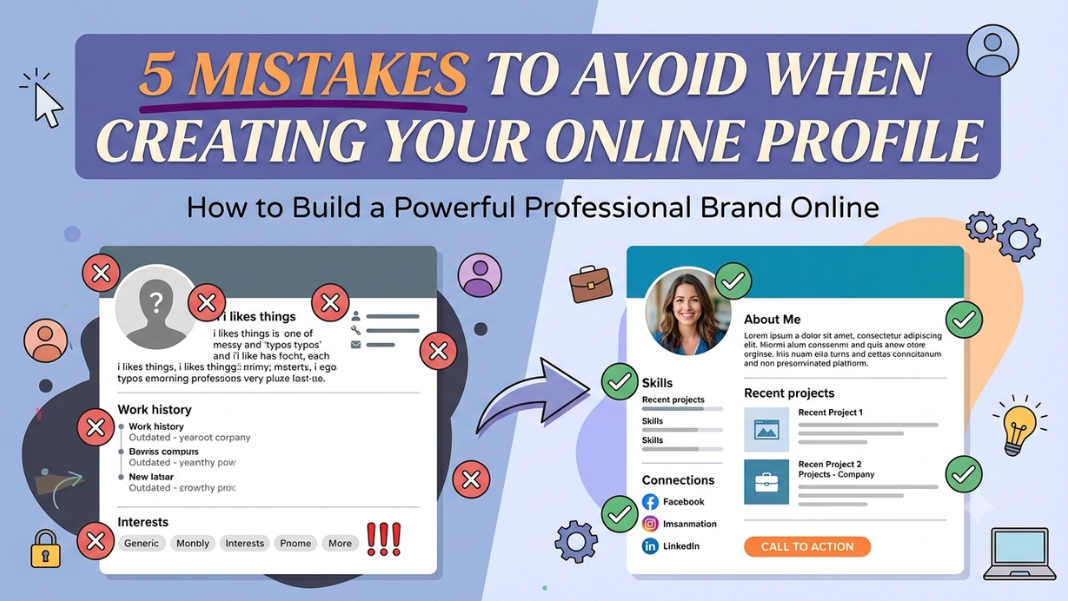
Most people put more thought into their coffee order than their online profile. Then they wonder why it doesn’t generate leads, replies, or the kind of first impression they were hoping for. A profile isn’t just a formality – it’s often the first real interaction someone has with you. Here are the five mistakes that quietly sabotage it, and what to do instead.
Leading With Your Job Title Instead of Your Value
“Marketing Manager at XYZ Corp” tells someone where you work. It doesn’t tell them why they should care. Most profiles open with a title and a company name, then wonder why no one engages further. Fix it: Lead with what you actually do for people. “I help SaaS companies cut customer churn in half” says more in one line than three job titles combined. Save the formal title for a secondary line – it’s context, not the headline.
Leaving It Half-Finished
This one is more common than most people realize. A profile with a blank bio, no profile photo, or a handful of dead links doesn’t read as “in progress” to a visitor – it reads as abandoned. And an abandoned profile actively damages trust more than having no profile at all. Fix it: Treat “complete” as the minimum bar, not the goal. A photo, a short bio, working contact links, and at least one piece of work or proof of credibility. If a section isn’t ready, leave it out entirely rather than publishing it empty.
Making It Hard to Actually Contact You
Some profiles look great and then bury the one thing that matters most – how to reach the person. No email, no direct link, a contact form that goes nowhere, or worse, a name with zero way to follow up. Fix it: Put your contact method somewhere obvious, not three clicks deep. If you use a digital profile with tap-to-share or QR functionality, make sure it actually exports a usable contact card – the whole point is removing friction, not adding another step.
Copy-Pasting the Same Bio Everywhere
A bio written for LinkedIn doesn’t automatically work on a personal site, a conference badge, or a digital business card. Each platform has a different context and a different reader intent, but a huge number of profiles use one generic paragraph everywhere, regardless of fit. Fix it: Keep one core message, but adapt the length and tone to the platform. LinkedIn can hold a fuller story. A digital profile or QR-shared card should be scannable in five seconds – a line or two, not a paragraph.
Never Updating It After the First Draft
A profile built once and never touched again slowly becomes inaccurate – an old job, an outdated project, a dead link to a site that no longer exists. Visitors notice these mismatches faster than you’d expect, and they read as carelessness even when they’re just neglect. Fix it: Set a recurring reminder – quarterly is reasonable – to review your profile. New role, new project, new achievement, update it. A profile that’s easy to edit in one place beats one scattered across five platforms you have to remember to update individually.
The Bottom Line
None of these mistakes are dramatic on their own, but together they’re the difference between a profile that opens doors and one that quietly closes them. Lead with value, finish what you start, make contact effortless, tailor your message, and keep it current. Small fixes – but they change how seriously people take you at first glance.